Epiphany / Fire Chamber Volume Inserts
Fire Chamber Volume Inserts
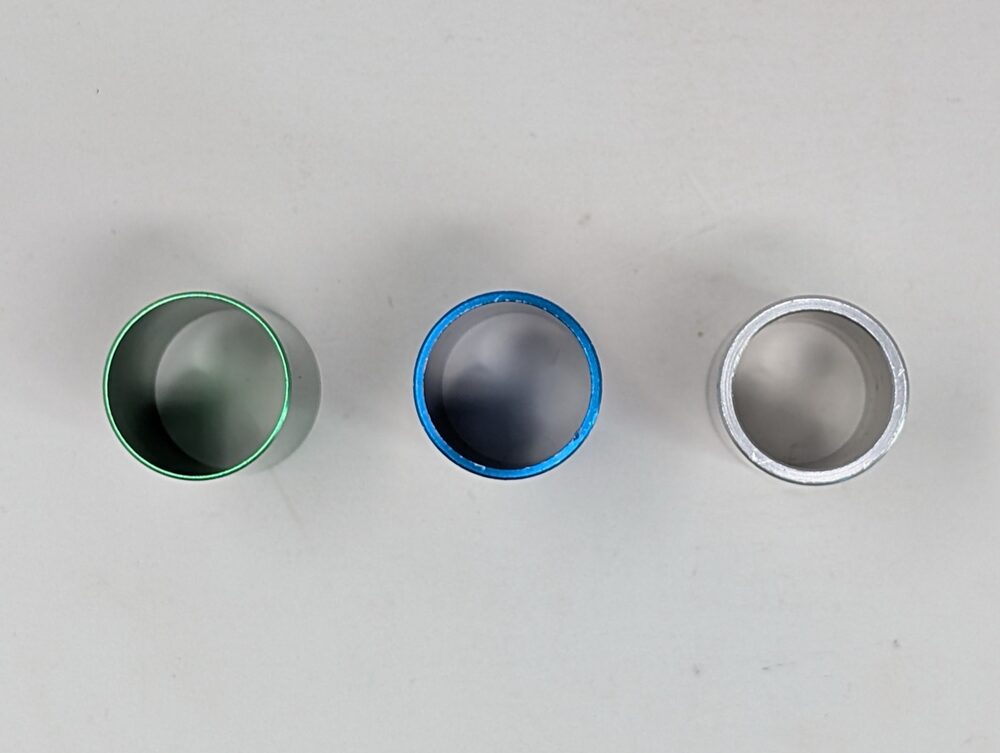
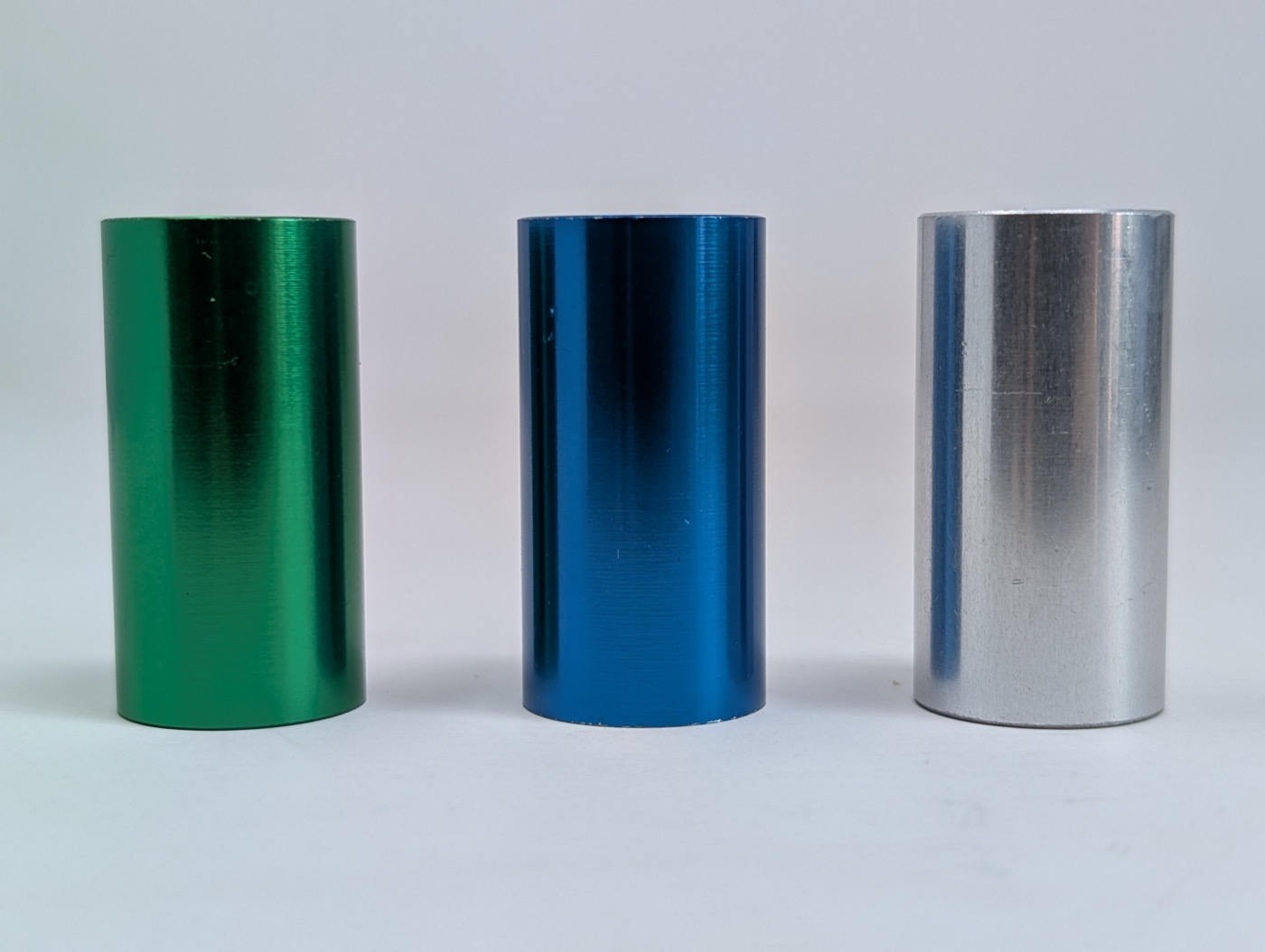
This is the Epiphany’s core difference from a standard Ion. To deliver consistent velocity at rates of fire above 10 bps, the Epiphany runs a smaller fire chamber volume than the Ion, recharged faster by its regulator, at a higher operating pressure (250–280 psi) than the Ion’s stock range. Three interchangeable inserts — silver, blue, green — let you tune the chamber volume and operating pressure together to suit your bolt, QEV setup, and conditions.
The three inserts
| Insert | Volume | Required pressure | Best for |
|---|---|---|---|
| None | Largest | Lowest | Baseline setup, stock Firebolt without a QEV |
| Green | Second largest | Lower-mid | Reducing pressure if you’re above 280 psi at your target velocity, or in high heat (softens hoses) |
| Blue | Second smallest | Mid-high | Stock Firebolt with a QEV — compensates for the Firebolt’s internal air space |
| Silver | Smallest | Highest | Indoor play, where field limits (often 250 fps) are low enough that velocity consistency under rapid fire becomes the priority |
Changing an insert
- Degas and disassemble down to the fire chamber (see Teardown).
- Reach a finger into the fire chamber and pull the installed insert straight out — no tools needed.
- Slide the new insert (or no insert) into the fire chamber.
- Reassemble.
- Re-set your dwell — insert changes always require re-optimizing dwell, since the fire chamber volume changed. See Electronics.
- Re-check velocity on a chronograph before playing — pressure requirements shift with every insert change.
Only one QEV is rated for this
The Smart Parts 360 QEV (current version, post-2007) is the only quick exhaust valve specifically rated for Epiphany pressures. Other QEVs (ANS, Eclipse, Clippard/Virtue/Trinity/ASP, etc.) are rated for lower pressure and aren’t guaranteed here — they’ll often work initially, then develop leaks after a few days or weeks of play at Epiphany operating pressure.
Bolt compatibility
Nearly all Ion bolts and internals are compatible with the Epiphany, with one exception: the Deadlywind Hollow-Point bolt’s altered internal diameter contacts the fire chamber insert and won’t fit without machining the insert on a lathe. Beyond that specific case, avoid aftermarket bolts marketed as lowering operating pressure — the entire point of the Epiphany’s insert system is to run higher pressure, not lower it.
More than you want to tackle yourself? Check out the finished builds or get in touch to have your Ion serviced.