Parts / QEV
Aftermarket QEVs
The banjo fittings are the stock hose connectors — see Teardown for removing them. A QEV (quick exhaust valve) replaces the middle banjo specifically, venting air right at the valve instead of routing it back to the solenoid first — shorter dwell time, better efficiency, better battery life.
Stock banjo fitting
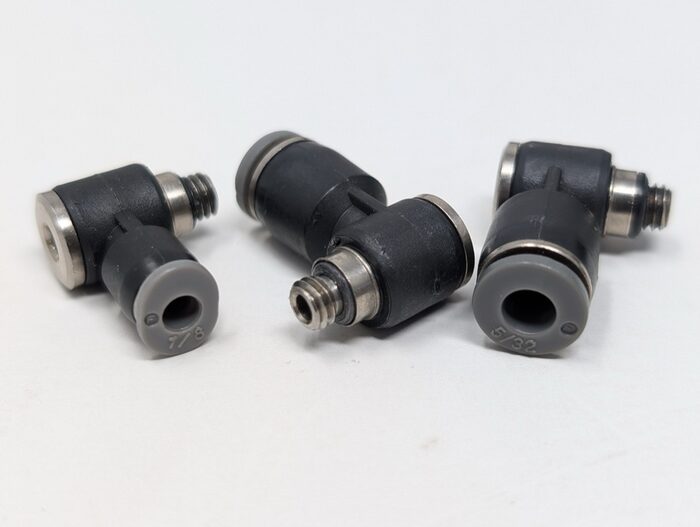
A push-to-connect fitting on a 10-32 thread, removed and installed with a 1/8" hex key — see Thread Sizes & Barrel Compatibility for the exact spec. Three of them connect the marker's hoses: front (over the vertical adapter), middle, and rear. The QEVs below are all drop-in replacements specifically for the middle banjo — the front and rear stay stock either way.
You'll sometimes see the front and rear banjos swapped for colored aftermarket versions too — that's purely cosmetic, color-matching a build. Neither zdspb nor the official Smart Parts manual documents any functional upgrade path for those two positions; the manual specifically says to replace them with genuine Smart Parts Ion/Epiphany fittings if needed. The performance case only exists for the middle position, via the QEVs below.
QEVs that fit
- Ion QEV ANS A genuinely distinct ANS-branded 10-32 QEV, not a Clippard resale — marked an "ANS Gear exclusive," rated for all Ion markers including Epiphany. Confirmed as a real product at both ANSgear and ANSXtreme, but showing out of stock or preorder-only at both.
-
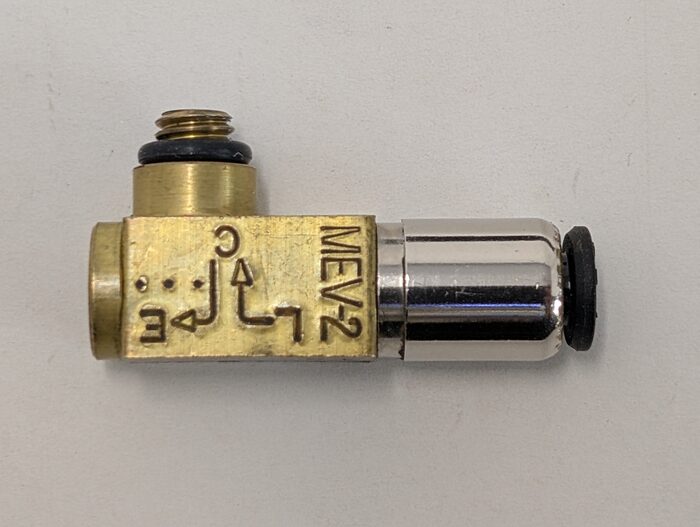 MEV-2 Clippard Clippard's own model name for the generic industrial brass QEV sold into the Ion aftermarket (Clippard makes pneumatic components broadly, not just paintball parts) — confirmed via Clippard's own part datasheet as a genuine "Miniature Exhaust Valve," #10-32 thread, brass body with a Buna-N seal. Sold for the Ion fitted with the correct o-rings and either a microline barb or push-to-connect fitting depending on the seller — this specific unit's push-to-connect end is marked "Legris 7/8," confirming that variant in hand. Same dwell-time and efficiency benefit as the 360°. Available from several paintball sellers — Oregon Paintball, Trinity Paintball, New Designz, and others — in addition to Clippard's own industrial channel.
 - Ion QEV Lucky Paintball A drop-in kit, no body cutting required, vents air right at the port — same benefit as the others on this page. Confirmed as a real product via a Canadian retailer listing (paintballgear.ca) — rechecked, and that same listing now explicitly shows out of stock.
- Ion QEV Kit New Designz (NDZ) Also confirmed as a genuine, distinctly-branded NDZ product, not a Clippard resale — a drop-in kit including quick-disconnect fitting and hose, no body mods needed. Same discontinued status as NDZ's other Ion parts covered elsewhere on this site; the E-Paintball listing linked here is showing out of stock.
-
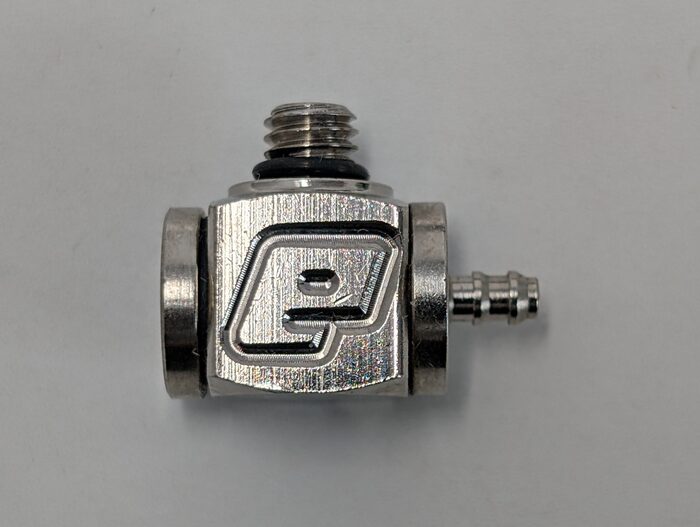 QEV (Ego/Etek/CS2 diaphragm) Planet Eclipse Works, per zdspb, but requires cutting the Ion's exoskeleton to fit correctly — this is Eclipse's own internal QEV component for their Ego/Etek/CS2 markers, adapted into the Ion rather than sold as an Ion-specific product. Worth knowing about, but expect body modification, not a drop-in install. A fresh check found the specific Ion-adapted resale listing now filed under Discontinued Items, even though Eclipse itself still actively sells other markers. E-Paintball is a dormant store, so this is a reference link, not confirmed current stock.
 -
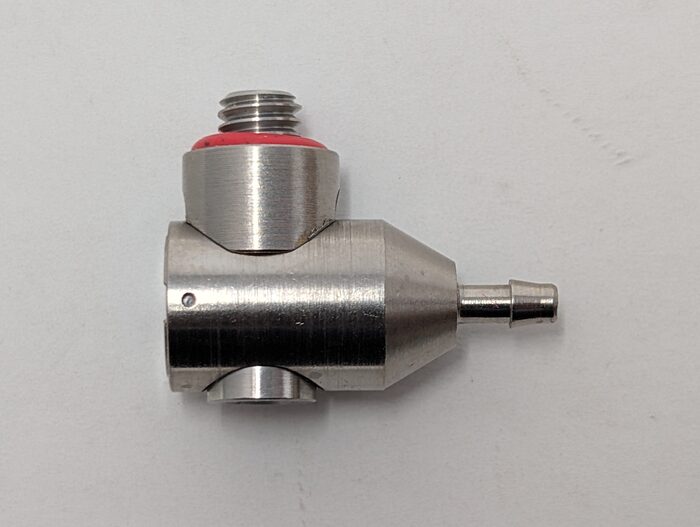 360° QEV Smart Parts (now sold as GOG) The only QEV built specifically for the Ion — installs and removes with an allen wrench exactly like the stock middle banjo fitting, no modification needed. Vents air right at the valve instead of back at the solenoid, shortening dwell time and improving efficiency and battery life. Same continued-lineage situation as the Firebolt: originally a Smart Parts part, still sold today under GOG/Kee Action Sports branding.
 -
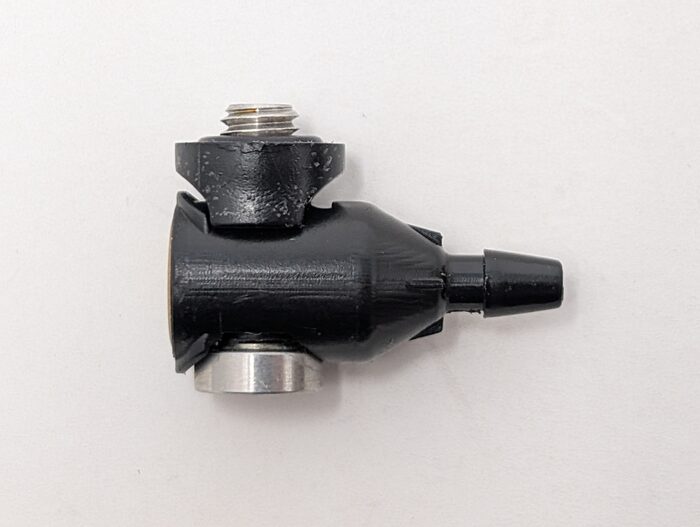 Unidentified black plastic banjo fitting Unknown A black plastic/nylon banjo-style fitting, a different construction from the brass fitting above rather than the same part in a different material — a 10-32-style threaded stud retained by a silver metal ring (not a rubber O-ring like the brass one) on top, a single barb on the side, and two distinct port faces on either end: one showing a brass insert or plug, the other a plain silver retaining ring. No maker's marks visible anywhere on the piece. Found in a few different Ions. If you can identify this, it's worth adding properly; until then this entry exists so the photos aren't lost.
 -
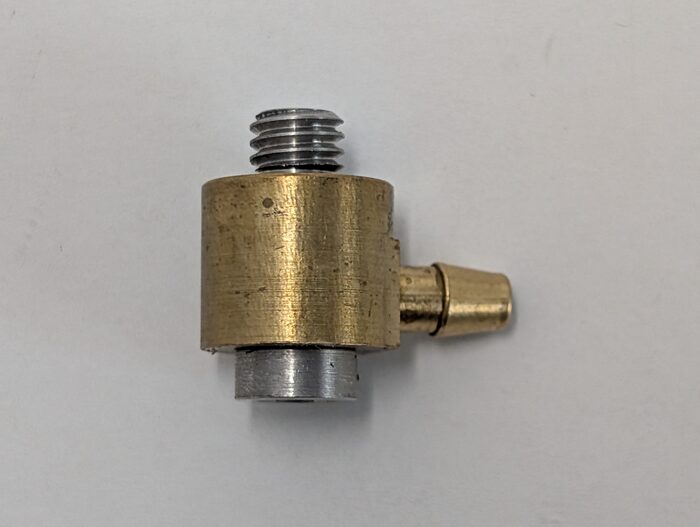 Unidentified brass fitting Unknown A brass banjo-style fitting — 10-32-style threaded stud with an O-ring on top, a single barb on the side, and a separate steel cap on the bottom that looks like it could retain an internal check-valve mechanism. No maker's marks visible anywhere on the piece. Checked against Clippard's MEV (exhaust valve), MCV, and MJCV (check valve) lines directly via their own datasheets — none match this exact construction. If you can identify this, it's worth adding properly; until then this entry exists so the photo isn't lost.
 -
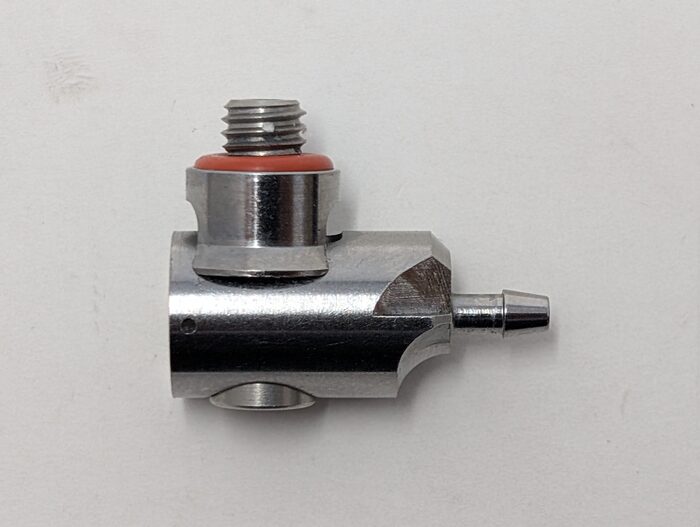 360° QEV (similar) Unknown — resembles Smart Parts/GOG Same general 360° QEV architecture as the Smart Parts/GOG entry above — same red o-ring at the threaded stud, same slotted-screw adjustment — but not confirmed to actually be a Smart Parts/GOG unit. Kept as its own separate entry rather than merged with the confirmed 360° above until the maker is actually confirmed one way or the other.
 - QEV Virtue Confirmed as a genuine, distinctly-branded Virtue product for the Ion — not just a reseller of the Clippard-generic QEV above. Retailer copy describes it as a 10-32 fitting that works with all Ion markers, same drop-in function as the others on this page (vents at the valve instead of routing exhaust back through the solenoid). No current major-retailer listing found to link to directly — the only lead was a small individual marketplace seller, not the kind of source this site otherwise treats as confirmed.
- Ion Spinner QEV Kit Warrior A genuine Warrior-branded product, "compatible with all Ion markers," not a generic resale. E-Paintball filed it under Discontinued Items (SKU 100534) — a reference link, not confirmed current stock, since that store is dormant.