Parts / Bolts
Aftermarket Bolts
The bolt is the Ion's whole valve, not just a moving part — see Firing Assembly for how it actually works and how to service one. This page is about what else you can put in that slot.
The real efficiency factor: tail o-rings, not weight
The stock bolt uses a single tail o-ring, which slows down air re-entry during firing but doesn't fully shut it off. A bolt with two tail o-rings can seal the fire chamber off completely while it cycles, which is a real, mechanical efficiency gain — independent of how much the bolt weighs. This is why some lightweight bolts also market efficiency claims: several of them happen to add the second o-ring as part of the same redesign, not because they're lighter. Looking at zdspb's own photos of each bolt below, dual tail o-rings turn out to be closer to the industry norm than the exception — the stock bolt and the HollowPoint's ported design are the notable holdouts.
Every bolt on this page is a drop-in replacement — same install and service procedure as stock — and every one claims compatibility across Ion, Ion 2.0, and Ion XE (the bolt itself is shared across the whole family; only the XE's bolt stop is a possible exception — see the note on the Ion XE guide). Whichever bolt you run, it needs a correctly-set dwell to cycle reliably — see Electronics if you're swapping bolts and getting inconsistent shots.
Stock bolt
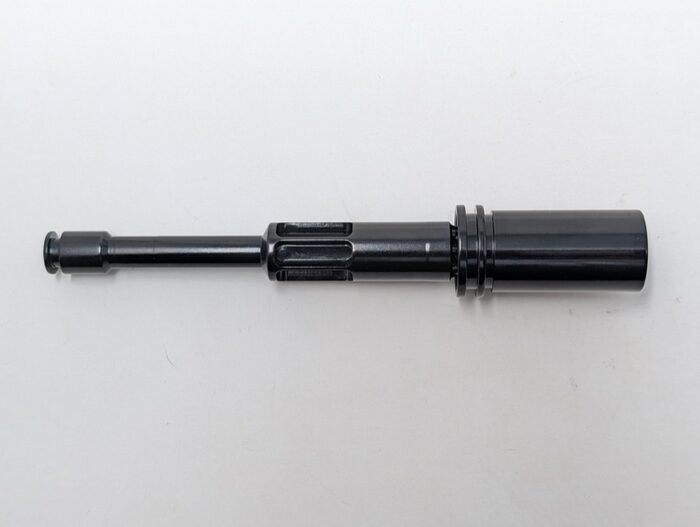
One-piece aluminum, 32.9g, single tail o-ring — per zdspb's own spec sheet. The baseline everything below gets compared to, and fine as-is; most of this page is about recoil feel, not fixing a broken marker. This is the Ion 1.0/2.0/XE stock bolt specifically — the Epiphany ships with a different stock bolt, the Firebolt (see below).
Aftermarket bolts
- Delrin Bolt Alamo City Weight unverified Turned up in a 2007–2008 community parts catalog with no further spec or maker detail available.
-
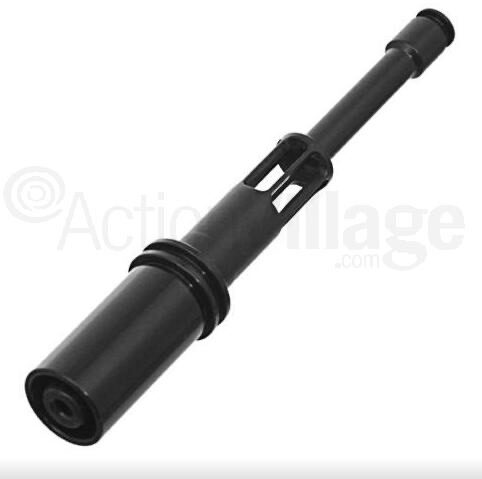 Pillow Bolt Bob Long 25.1g 7g lighter than stock. Hollowed and ported shaft, with a distinctive rubber "pillow" on the bolt face that acts as a shock absorber — reduces paint breakage with brittle tournament paint or in cold weather, a feature none of the others here have. The linked ANSgear listing is filed in their "Paintball Graveyard": "the manufacturer has discontinued this product and there is no chance of ever receiving it."
 -
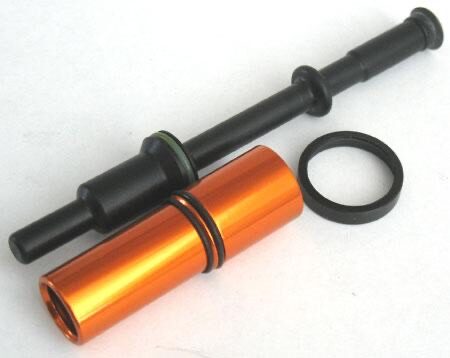 HollowPoint (U3) Deadlywind 9.0g Uses what Deadlywind calls "Hollow Valving" — one large hollow passage instead of the stock bolt's several smaller ports — claiming over twice the valve flow area. zdspb's own note calls it out for lacking traditional porting entirely, and separately observes it's "invulnerable to snapping problems" as a result, plus a built-in anti-rollback feature. zdspb's spec sheet lists an earlier revision at 7.4g; the final "U3" was heavier, at 9.0g. Worth knowing: at least one technical review found it doesn't achieve the same chamber-sealing effect a true dual-tail-o-ring bolt does, despite the flow-focused design. Deadlywind's own site states plainly: "We have decided in May 2013 to discontinue the HP bolt line."
 -
 Aluminum Lucky Paintball 29.5g Lucky's answer to the LBM's fracture risk — an all-aluminum version made specifically so it couldn't snap the way the polymer LBM could.
 -
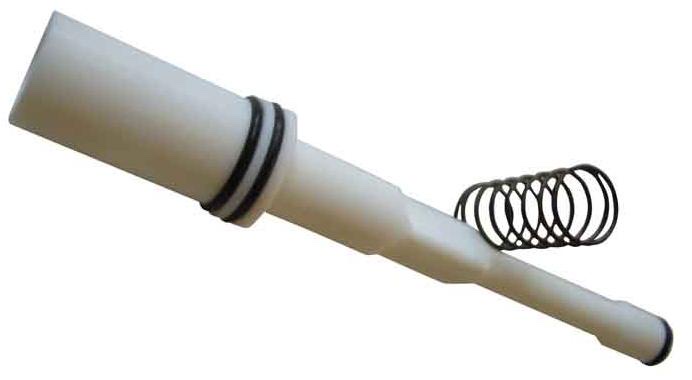 LBM Lucky Paintball 15.1g Delrin/polymer construction. zdspb flags the inner bolt stop o-ring as prone to blowout (recommends a stiffer 14/90 replacement) and the bolt itself as capable of fracturing under extreme use, since it's two pieces fused together.
 -
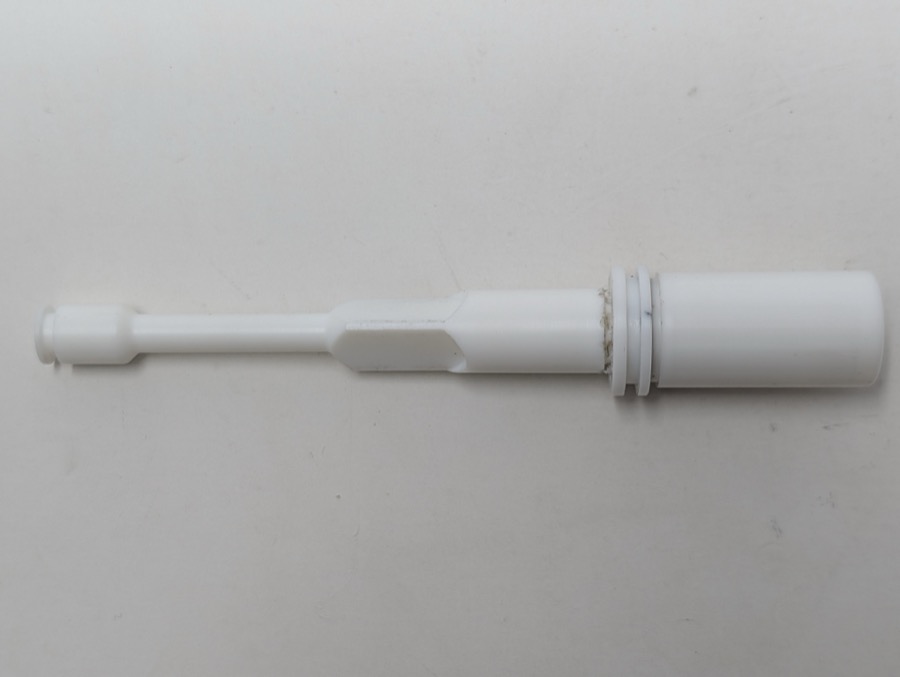 v3 (LBM) Lucky Paintball A later revision of the LBM line, per zdspb bundled with a new bolt stop. Photo is mine — the only one-piece polymer/delrin-style bolt on this page, identifiable by material alone rather than needing to count ports.
 -
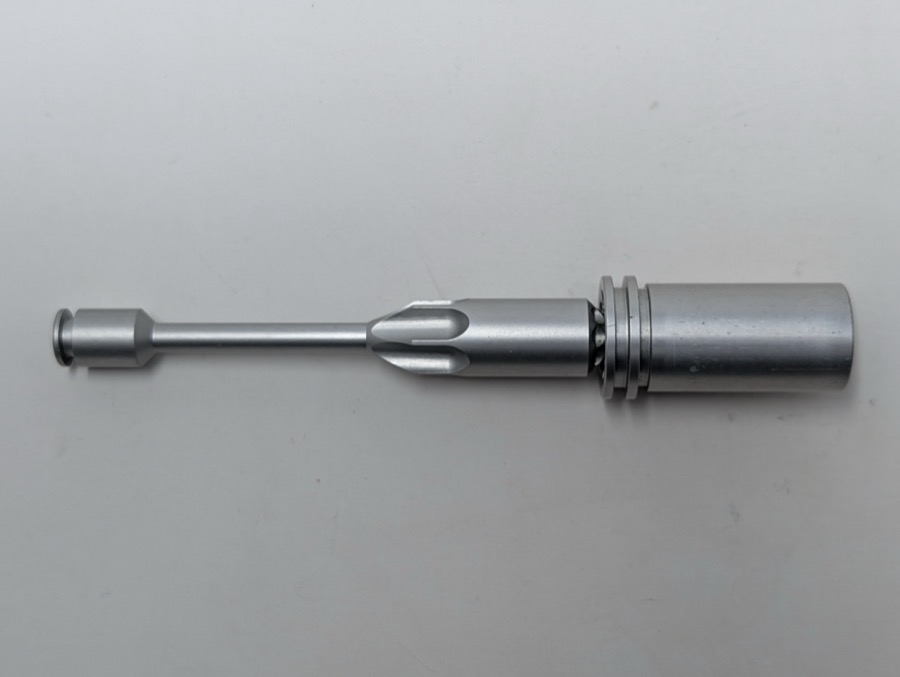 Pro-Equ New Designz (NDZ) 24.9g NDZ's earlier EQ-style bolt, marketed at the time as the lightest single-piece aluminum bolt available for the Ion. Photo is mine — identifiable by its 8 oval (not round) ports around a visible center bore, distinct from the stock bolt's 8 round ports.
 -
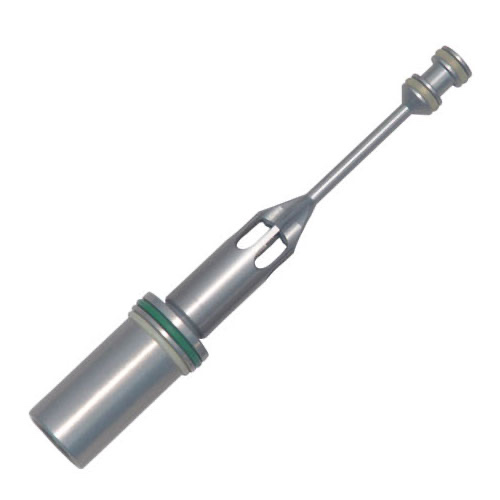 Skeleton (Double O) New Designz (NDZ) 10.5g A redesign of NDZ's earlier "Pro-Equ" bolt. Reduced tail shaft diameter with a high-flow port design — the "Double O" name refers directly to its dual tail o-ring seal. E-Paintball's listing is confirmed out of stock and filed under Discontinued Items, consistent with NDZ's company-wide pivot to firearms accessories (see the Triggers page) — their current catalog has no paintball products at all.
 -
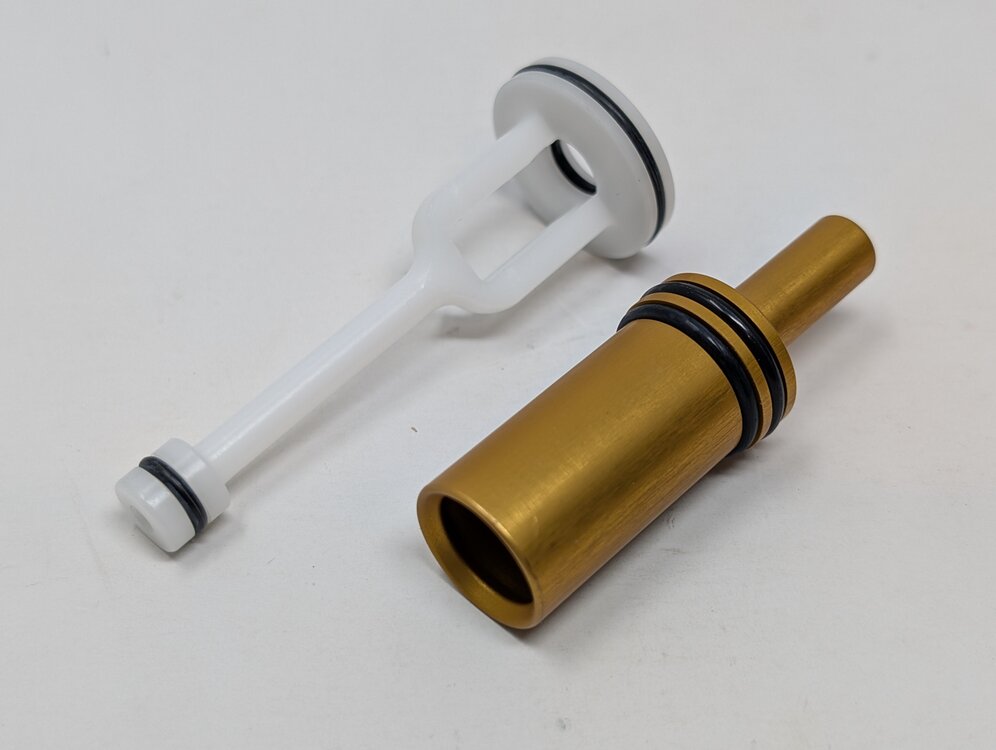 Nano Orange Paintball 17.4g A different bolt from the Unicorn, not a variant of it — included a newly resized bolt stop. One of the early commercially successful lightweight-bolt designs, alongside reported flow problems.
 -
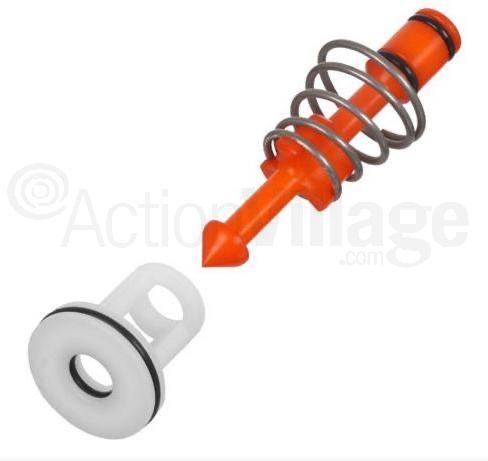 Nano Extreme Orange Paintball An upgrade kit sold separately, meant to be used with an existing Nano bolt rather than as a standalone replacement. The linked ANSgear page is filed in their "Paintball Graveyard," confirming the manufacturer discontinued it.
 - Serum Orange Paintball Weight unverified Orange Paintball's successor to the Unicorn bolt above — a 2007–2008 community catalog lists the Unicorn as "no longer made, see Orange Serum Bolt." ANSgear's own listing files it in their "Paintball Graveyard," confirming the manufacturer discontinued it.
-
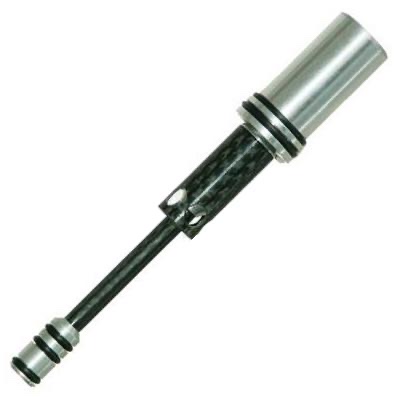 Unicorn Orange Paintball Used a carbon-fiber section that zdspb notes was prone to tolerance problems and wear over time.
 -
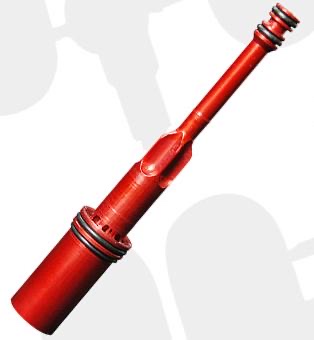 Ion bolt (part of the Redz Ion package) Redz 21.5g Bundled with a full Redz body kit, clamping feedneck, and barrel as a complete upgrade package rather than sold standalone. The linked E-Paintball listing is for that full package rather than confirmed to name the bolt specifically — moderate confidence only — and is a reference link, not confirmed current stock, since that store is dormant.
 -
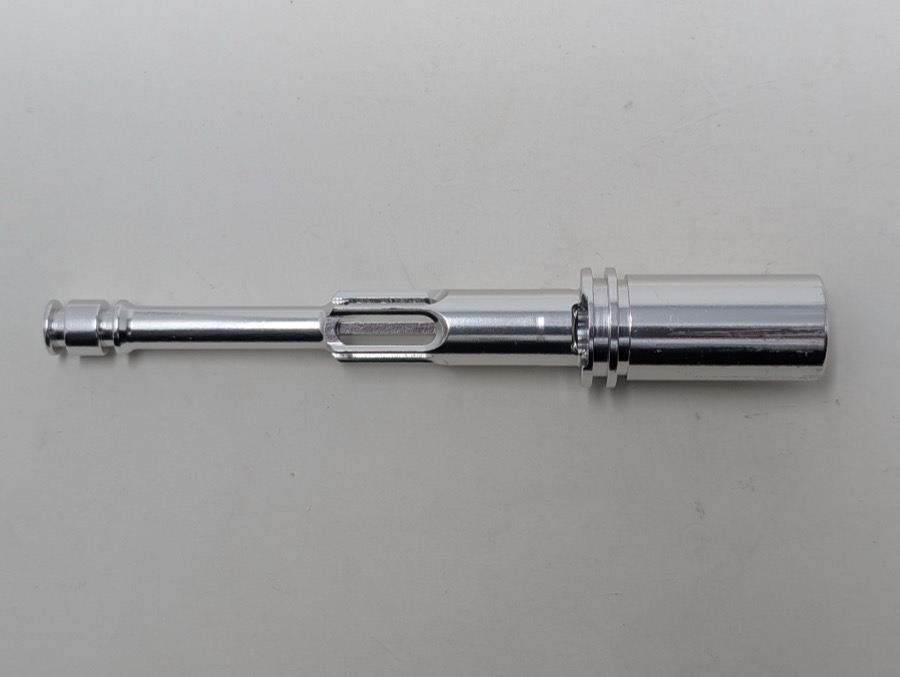 Superfly Shocktech Turned from a single piece of 6061 aluminum — no glued or press-fit sections. An Ion-specific listing does exist (E-Paintball), filed under Discontinued Items and marked out of stock there. Photo is mine — a chrome/silver example (ANSgear separately lists a "Shocktech Ion Superfly Bolt - Silver," confirming this finish is a real factory option, not a one-off). Identifiable by its evenly-spaced, symmetric 3-port face, matching the "3-hole venturi design" language from its original marketing.
 - Lava Bolt Silhouette Weight unverified Turned up in a 2007–2008 community parts catalog with no further spec or maker detail available.
-
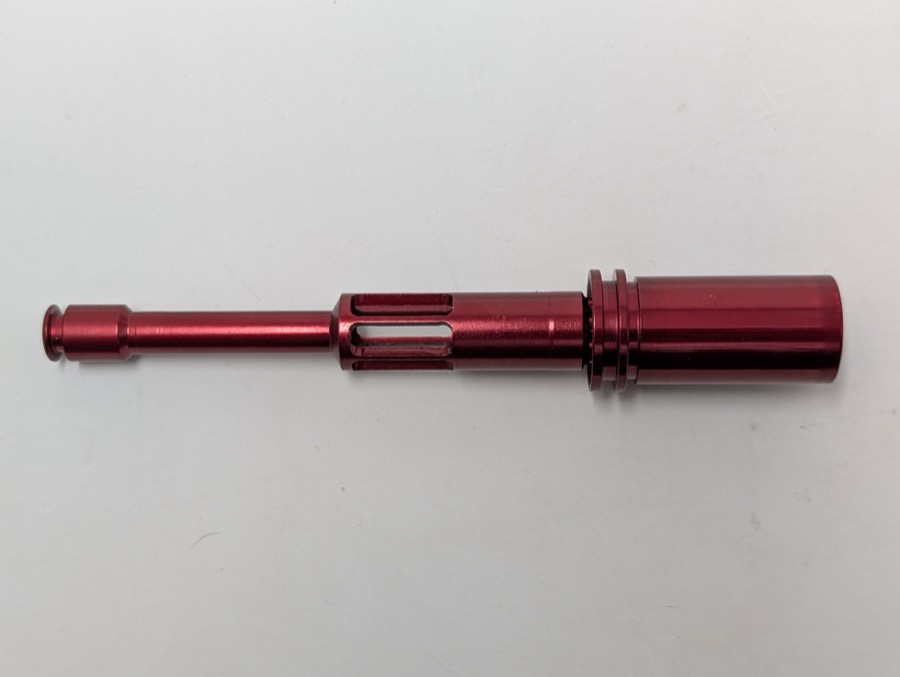 Firebolt Smart Parts, continued by GOG 16.0g Two-piece aluminum, built with dual tail o-rings in its later run. zdspb's own reference lists it as an "SP" (Smart Parts) part; later listings attribute it to GOG — Smart Parts' original founders started GOG after the 2010 closure, continuing several of the old lineup including this one, so it's very likely the same design carried forward under new branding rather than two unrelated products. ANSgear's own listing marks it discontinued. Standard equipment on the Epiphany — a factory listing confirms it directly ("the Smart Parts Firebolt is a standard feature of the Epiphany"), and the official Epiphany manual's own parts diagram labels it ION209 – Fire Bolt. Not just an aftermarket upgrade there the way it is for Ion 1.0/2.0/XE. Photo is mine — a maroon/burgundy anodized example, identifiable by 8 round ports arranged in a ring around a raised center hub. Genuinely disassembles into two pieces — I pulled one apart myself, breaking a red-threadlocker bond to unthread the bolt head from the tail (not something to attempt casually). Inside, at the front of the tail piece where the head threads on, is a previously-undocumented o-ring, separate from the externally-visible tail o-ring(s) already covered above. It was too degraded on mine to read a durometer directly — zdspb's own Firebolt diagram gives it as 11/70 (a static seal at that joint, per the diagram's own color-coding), which supersedes my own initial working guess of 10/90 UR. The diagram doesn't specify material, so UR is still an assumption there, not confirmed.
 -
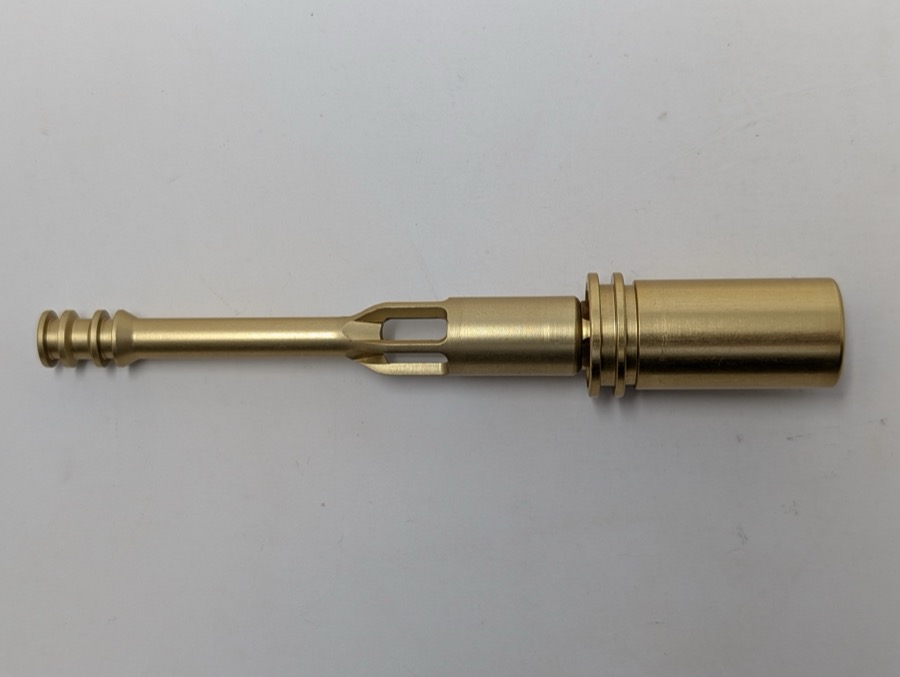 L6 TechT 16.5g TechT's earlier lightweight bolt. Their o-ring rebuild kits still cover it, but it's not part of their current lineup — secondhand only. Photo is mine — identifiable by its distinctive 4-port cross-pattern face, unlike the Superfly's 3-port face or any other bolt on this page. The linked E-Paintball listing is a reference link, not confirmed current stock, since that store is dormant.
 -
 L7 TechT 7.1g One-piece aluminum, polished, anodized, and teflon-impregnated. Includes a new bolt stop and rear plug component. TechT's own listing calls it "the lightest Ion bolt ever made" at 7.1g — zdspb's independent spec sheet lists an older L7 revision at 8.5g, consistent with TechT having released a lighter version since. The only bolt on this page TechT still lists as their own product, even though it's not currently shippable.
 -
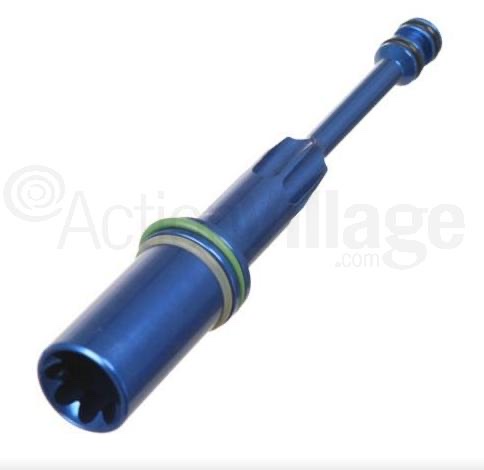 Trinity Trinity 11.4g zdspb lists this as its own distinct Ion bolt, and that's confirmed by ANSgear, which carries it as the "Trinity Ion Sick Bolt" — a real, distinct Ion part, not to be confused with a same-named Tippmann A5/X7 product. It's filed in ANSgear's "Paintball Graveyard," which states plainly: "the manufacturer has discontinued this product and there is no chance of ever receiving it."
 - Spudnuk'l Bolt Unknown Weight unverified Turned up in a 2007–2008 community parts catalog under this name with no maker or spec detail given — possibly a nickname for a modified stock/other bolt rather than a distinct commercial product. Flagged as-is rather than guessed at.
- SL Bolt Warrior Weight unverified A lighter, single-piece-aluminum bolt line from Warrior, turned up in a 2007–2008 community parts catalog with no further spec detail given there. No current or archived retailer listing found for this specific (non-"Version 2") revision — likely superseded by the SL Bolt Version 2 below, the same pattern as several other superseded bolts on this page. Warrior's other Ion parts (bodies, feednecks, triggers) covered elsewhere on this site have mixed current status.
- SL Bolt Version 2 Warrior 16.0g A revision of the SL Bolt above, distinguished by ANSXtreme's own listing as having "a slightly different bolt face and a different type of hole pattern to strengthen the bolt." Single-piece aluminum, dual tail o-rings, fits Ion and SP-8. Confirmed via direct page text: "(Out of Stock)."
Stock, Firebolt, Superfly, TechT L6, Lucky v3 (LBM), and NDZ Pro-Equ photos are mine; remaining aftermarket bolt photos via zdspb.com, used with permission — see the disclaimer for attribution terms.
Never released
SRC (Self-Regulating Chamber) (MCP): A multi-piece redesign replacing both the bolt and bolt stop with an added moving component to seal airflow. zdspb's own project — over a dozen design iterations, roughly half prototyped, a planned 2006 release — but the project was transferred to another party and never finalized. Never sold.
A little history
Lightweight Ion bolts didn't start with any of the options above. Early attempts included a titanium multi-piece design that never shipped commercially (too costly and complex to produce), and a delrin "Stubby" bolt that was light but suffered from poor flow rates and was never marketed. The Nano and TechT's own L6/L7 line emerged as the commercially successful answer to that same weight-vs-flow problem.