Guides / Ion 2.0
Ion 2.0
"Ion 2.0" refers to Smart Parts' refined production run of the original Ion — same core spool valve and firing assembly, with a handful of running changes layered on top. Every internal service procedure below is identical to the Ion 1.0 guide; this page exists to flag what's actually different before you start.
Where "2.0" actually fits historically: Smart Parts'
own generational split was Ion/Epiphany/SP8 (2005–06) as "first
generation," then Ion XE/EOS/SP1/Vibe (2008) as "second generation" —
the XE's rear-load bolt system is what actually defines that second
generation. "Ion 2.0" doesn't appear as a distinct model in that
breakdown at all. What it looks like happened: Smart Parts later
grafted a few second-generation-derived parts — the R-type regulator,
the newer button style — onto the still-front-loading original Ion
body as a running update, without adopting XE's rear-load system. That
lines up with what's actually observable: Ion 2.0 still loads from the
front like Ion 1.0, it just carries some newer-style components.
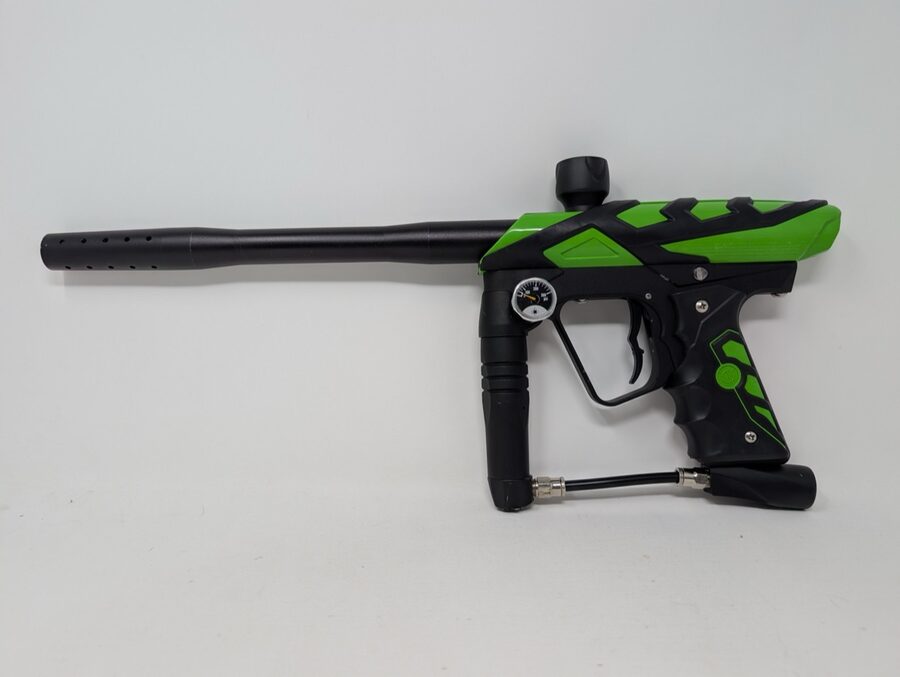
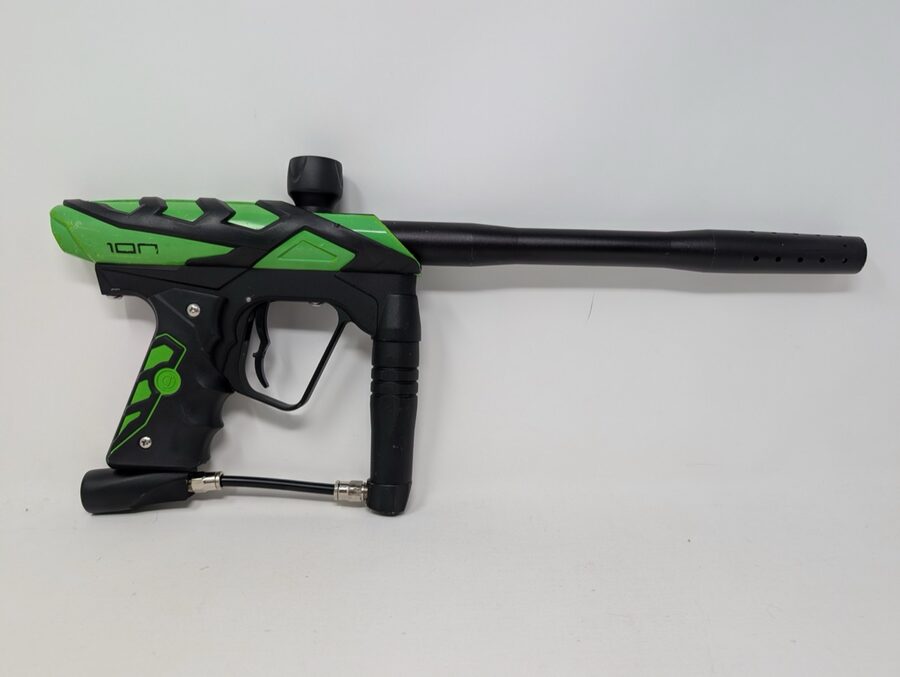
What's actually different from Ion 1.0
- Feedneck matches the Epiphany's, not the Ion 1.0's — a different stock part, though it's on the same thread family as the 1.0's, so aftermarket feednecks and hoppers built for the Ion still fit.
- Clear plastic on/off button, in place of the original's membrane/sticker-style button — the same button style used on the Epiphany. (The Ion XE, despite sharing several parts with the 2.0/Epiphany era, actually kept the Ion 1.0's membrane button.) It's a frame-level change, not just the button itself: the 2.0's grip frame is molded with an outline shaped for the plastic button, while the 1.0's frame is molded for the membrane button — a visible tell even with the button removed.
- Sleeker regulator body with a straight fitting in place of the 90° macroline fitting the original Ion uses. This is a genuinely different part — its shape means it won't accept the OEM regulator covers built for the Ion 1.0's regulator.
- ASA also uses a straight fitting instead of the Ion 1.0's 90° fitting — a different part, but one that swaps onto an Ion 1.0 or XE without issue if you want to mix and match.
- Longer-wear ball detents — roughly 10x the service life of the originals, per period retailer listings, worth knowing if you're diagnosing paint breakage and assuming detent wear on a timeline that applied to Ion 1.0.
Everything else — body, grips, bolt, board, firing assembly, solenoid, trigger adjustment, o-ring sizes — is fully interchangeable with Ion 1.0. Use the Ion 1.0 guide pages directly for those; there's no reason to duplicate them.
Teardown Where full disassembly begins — same sequence as Ion 1.0. Firing Assembly Identical firing assembly and service procedure. Regulator & ASA Same rebuild procedure as Ion 1.0. Electronics Same programming and solenoid service. O-Rings & Torque Specs Same sizes as Ion 1.0. Troubleshooting Same diagnostic approach as Ion 1.0.
Advertisement